


Onychomycosis is the most common nail disease.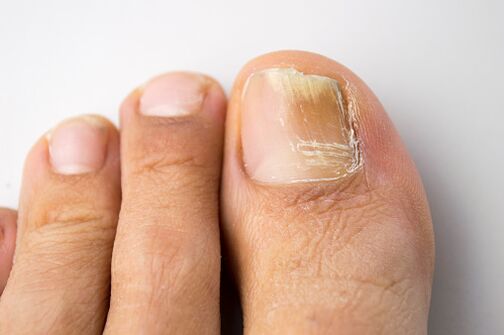 It has been established that 50% of cases of nail plate changes are associated with mycotic infection.Epidemiological studies carried out in Russia and abroad revealed a high incidence of onychomycosis, which ranged from 2 to 13% in the general population.The risk of developing onychomycosis is higher in older patients.For example, in people over the age of 70, the prevalence of onychomycosis of the feet may be 50% or more.It is believed that this is facilitated by slow growth of nail plates, disorders of peripheral and main circulation in older people.A high incidence of onychomycosis is also detected in patients with immunodeficiency (including patients with AIDS) and in patients with diabetes mellitus.
Often, patients and some doctors perceive onychomycosis as an exclusively cosmetic problem.However, it is a serious disease that occurs chronically and which, in cases of immunodeficiency or decompensation of endocrine diseases, can cause the development of generalized mycoses of the skin and its appendages.Onychomycosis is often accompanied by the development of serious complications, such as diabetic foot, chronic erysipelas of the extremities, lymphostasis and elephantiasis.In patients receiving cytostatic or immunosuppressive therapy, the disease can cause the development of invasive mycoses.This is why treatment of onychomycosis is necessary and should be carried out in a timely manner.
Just a few decades ago, treatment for onychomycosis was laborious, time-consuming and unpromising.Medicines used to treat fungal diseases of the skin and its appendages were characterized by low effectiveness and high toxicity.To achieve a positive result, long-term treatment or an increase in the dose of medications was required, which was often accompanied by serious complications.Some treatments were potentially life-threatening.For example, X-ray therapy, the use of thallium and mercury have led to the development of skin cancer, diseases of the brain and internal organs in patients.
The emergence of highly effective and low-toxic antimycotic drugs has greatly facilitated the treatment of fungal diseases of the skin and its appendages.However, the results of the use of new antimycotics were not satisfactory.Controlled clinical trials have shown that the effectiveness of systemic antimycotics after treatment is 40-80% and after 5 years - 14-50%.At the same time, the effectiveness of treatment of onychomycosis increases with the use of complex treatment methods, which involve the use of etiotropic drugs and agents influencing pathogenesis.In addition, as a result of clinical trials conducted in European countries, it was found that the effectiveness of treatment of onychomycosis can be increased by an average of 15% through the combined use of systemic antimycotics and antifungal varnishes containing amorolfin.
Treatment
For the treatment of onychomycosis, drugs are used that differ in chemical composition, mechanism of action, pharmacokinetics and spectrum of antifungal activity.A common property for them is a specific effect on pathogenic fungi.This group includes azoles (itraconazole, fluconazole, ketoconazole), allylamines (terbinafine, naftifine), griseofulvin, amorolfine, ciclopirox.To treat onychomycosis, systemic drugs belonging to the azole group - itraconazole, fluconazole, as well as the allylamine group - terbinafine are used.Griseofulvin and ketoconazole are currently not prescribed for the treatment of onychomycosis due to low effectiveness and a high risk of adverse events.Varnishes and solutions containing amorolfine and ciclopirox are used as external agents for onychomycosis.
Allylaminesare synthetic antimycotics.Allylamines mainly act on dermatomycetes, while they have a fungicidal effect.The mechanism of their action is to inhibit the enzyme squalene epoxidase, which participates in the synthesis of ergosterol, the main structural component of the cell membrane of dermatomycetes.Allylamines include terbinafine and naftifine.
Allylamines are active against most dermatomycetes (Epidermophyton spp., Trichophyton spp., Microsporum spp., Malassezia spp.), the causative agent of chromomycosis and some other fungi.
Indications for oral administration of terbinafine are onychomycosis, common forms of cutaneous dermatomycosis, scalp mycoses, chromomycosis.Indications for external use of terbinafine and naftifine include limited skin lesions due to mycoses, tinea versicolor and cutaneous candidiasis.Terbinafine has high bioavailability and is well absorbed from the gastrointestinal tract, regardless of food intake.At high concentrations, the drug accumulates in the stratum corneum of the skin, nail plates, hair and is secreted along with the secretions of the sweat and sebaceous glands.The absorption of terbinafine when applied topically is less than 5%, that of naftifine - 4-6%.The concentration of terbinafine and naftifine in the skin and its appendages significantly exceeds the MIC of the main pathogens of dermatomycosis.Correction of the dosage regimen of terbinafine may be necessary when combined with inducers (rifampicin) or inhibitors of hepatic microsomal enzymes (cimetidine), since the former increase its clearance and the latter reduce it.
As a result of numerous controlled multicenter comparative clinical trials, it was found that terbinafine is the most effective antimycotic in the treatment of onychomycosis.
Terbinafineused for extensive skin lesions, onychomycosis, chromomycosis, in such cases terbinafine is prescribed orally.Terbinafine is the drug of choice in the treatment of onychomycosis, as it is most effective against the main causative agents of onychomycosis - dermatomycetes.Contraindications to the use of allylamines are allergic reactions to drugs from the allylamine group, pregnancy, breastfeeding, age under 2 years, liver diseases accompanied by liver failure (increased transaminases).
Azoles- the largest group of synthetic antimycotics.In 1984, the first systemic antifungal drug from the azole group, ketoconazole, was introduced into practice, in 1990 - fluconazole, and in 1992 - itraconazole.
Azoles used as systemic drugs have primarily fungistatic activity.An important advantage of azoles over other drugs is their broad spectrum of antifungal activity.Itraconazole is active in vitro against most pathogens of onychomycosis - dermatomycetes (Epidermophyton spp., Trichophyton spp., Microsporum spp.), Candida spp.(C. albicans, C. parapsilosis, C. tropicalis, C. lusitaniae, etc.), Aspergillus spp., Fusarium spp., S. Shenckii, etc.Fluconazole is active against dermatomycetes (Epidermophyton spp., Trichophyton spp., Microsporum spp.) and Candida spp.(C. albicans, C. parapsilosis, C. tropicalis, C. lusitaniae, etc.), but does not affect Aspergillus spp., Scopulariopsis spp., Scedosporium spp.
The pharmacokinetics of different azoles are different.Fluconazole (90%) is well absorbed from the gastrointestinal tract.For proper absorption of itraconazole, a normal acidity level is necessary.If a patient taking these medications has low acidity, their absorption decreases and, therefore, their bioavailability decreases.The absorption of itraconazole solution is greater than that of itraconazole capsules.Itraconazole capsules should be taken with food and itraconazole solution should be taken on an empty stomach.
Itraconazole is metabolized in the liver and excreted through the gastrointestinal tract.It is also secreted in small amounts by the sebaceous and sweat glands.Fluconazole is partially metabolized and is mainly excreted unchanged by the kidneys (80%).
Itraconazole interacts with many drugs.The bioavailability of ketoconazole and itraconazole decreases when taking antacids, anticholinergics, H2 blockers, proton pump inhibitors and didanosine.Itraconazole is an active inhibitor of cytochrome P450 isoenzymes and may alter the metabolism of many drugs.Fluconazole affects drug metabolism to a lesser extent.It is unacceptable to take azoles with terfenadine, astemizole, cisapride, quinidine, as fatal ventricular arrhythmias may develop.Concomitant use of azoles and oral antidiabetics requires constant monitoring of blood glucose levels, as hypoglycemia may develop.Taking indirect anticoagulants from the coumarin and azole group may be accompanied by hypocoagulation and bleeding;therefore, control of hemostasis is necessary.Itraconazole can increase the blood concentration of cyclosporin and digoxin, as well as fluconazole - theophylline and cause the development of a toxic effect.Dose adjustments and constant monitoring of drug concentrations in the blood are necessary.The combined use of itraconazole with lovastatin, simvastatin, rifampicin, isoniazid, carbamazepine, cimetidine, clarithromycin and erythromycin is contraindicated.Fluconazole should not be used with isoniazid and terfenadine.
Itraconazoleused for dermatomycosis (athlete's foot, trichophytosis, microsporia), pityriasis versicolor, candidiasis of the skin, nails and mucous membranes, esophagus, vulvovaginal candidiasis, cryptococcosis, aspergillosis, phaeohyphomycosis, sporotrichosis, chromomycosis, endemic mycoses, for the prevention ofAIDS mycoses.
Fluconazoleused for the treatment of generalized candidiasis, all forms of invasive candidiasis, including in immunocompromised patients, genital candidiasis, candidiasis of the skin, its appendages and mucous membranes.Recently, due to its safety and good tolerability, fluconazole is increasingly used for the treatment of patients with dermatomycosis with lesions of both the skin and its appendages (nails and hair).
Amorolfineis included in the varnish used to treat onychomycosis.The mechanism of action of amorolfine consists of disrupting the synthesis of ergosterol, the main component of the cell membrane of the fungus.It has fungistatic and fungicidal effects.Has a wide spectrum of action.The concentration of amorolfin in the nail plate significantly exceeds the MIC of the main pathogens of dermatomycosis for 7 days.Therefore, the drug can be applied no more than 1-2 times a week, which makes its use economically profitable.Contraindications: allergic reactions to amorolfine, infancy and young children.Varnish monotherapy is prescribed when no more than 1-3 nail plates are affected and no more than half of the area from the distal end is affected.Amorolfine may also be used in combination with systemic antimycotics for more extensive nail lesions.
Ciclopiroxhas a fungistatic effect.Active against dermatomycetes, yeast-like and filamentous fungi, molds, as well as certain Gram-negative and Gram-positive bacteria.Ciclopirox (varnish) is used as monotherapy when no more than 1 to 3 nail plates are affected on no more than half of the surface from the distal end.Ciclopirox may also be used in combination with systemic antimycotics for more extensive nail lesions.Contraindications: allergic reactions to ciclopirox, infancy and childhood, pregnancy and breastfeeding.
List of laboratory tests recommended when prescribing systemic antifungal medications.
- Clinical blood test.
- General urine analysis.
- Biochemical blood test (ALT, AST, bilirubin, creatinine).
- Ultrasound of the abdominal organs and kidneys (preferably).
- Pregnancy test (preferable).
Treatment of underlying diseases.The effectiveness of the use of antimycotics increases with the correction of pathological conditions contributing to the development of onychomycosis.Before starting antimycotic treatment in patients with somatic, endocrine, neurological diseases and circulatory disorders of the extremities, it is necessary to conduct an examination to identify the main symptom complex that contributed to the development of dermatomycosis.Thus, the main goals of pathogenetic therapy are to improve microcirculation in the distal parts of the extremities, venous outflow of the extremities, normalize the level of thyroid hormones in patients with thyroid diseases, carbohydrate metabolism in patients with diabetes mellitus, etc.As a result of many years of research, it has been established that one of the main reasons for the development of dermatomycosis is disorders of the pituitary-hypothalamus-gonadal system.This leads to circulatory disorders in the distal extremities, disorders of microcirculation and peripheral innervation.A set of measures aimed at correcting these disorders includes acupuncture, transcranial electrical stimulation of the subcortical centers of the brain and the prescription of drugs correcting the functioning of the sympathetic and parasympathetic autonomic nervous system.All this allows you to achieve a faster clinical effect in the treatment of dermatomycosis.It is advisable to prescribe pathogenetic treatment to patients with dermatomycosis with underlying diseases before the start of etiotropic therapy and continue it for the entire period of taking antifungal drugs.
Symptomatic therapyof dermatomycosis, aimed at reducing subjective complaints of patients and objective manifestations of the disease, cannot replace etiotropic therapy.However, its use in combination with antifungal drugs allows you to quickly improve the condition of patients, reduce the feeling of discomfort and eliminate cosmetic defects.With onychomycosis, the greatest concern of patients is caused by deformed and significantly thickened (hypertrophied) nail plates - onychogryphosis.To correct this condition, a hardware pedicure is used.Using a device that resembles a dental turbine, damaged areas of the nails, hyperkeratotic areas, horny masses of the skin and calluses are mechanically removed in a short time.In this case, there is no trauma to the nail matrix and the patient remains functional after the procedure.
For limited nail damage (no more than 3 nail plates and no more than 1/2 area from the distal edge), topical preparations are used.It is recommended to start treatment by cleaning the affected area of the nail plate using a hardware pedicure or keratolytic agents.Then antifungal drugs are applied to the affected nail plate.Amorolfine solution containing ciclopirox is applied to the nail plate 1-2 times a week.Before applying varnish, you do not need to first clean the nail plate from previous layers of the preparation.The varnish is applied daily until the healthy nail plate fully develops.On the 7th day, the nail plate is cleaned using any cosmetic nail polish remover.There are conflicting reports in the literature on the effectiveness of this treatment method.The percentage of recovery of patients is indicated from 5 to 9 to 50%.
In case of widespread damage to the nail plates of the fingers, a set of therapeutic measures should include the prescription of a systemic antimycotic, cleaning of the nails and external treatment with antifungal drugs.In order to avoid reinfection, it is necessary to process the patient's gloves and disinfect personal hygiene items (washcloth, napkins, nail files, graters and scrapers for treating skin and nails).
The drug of choice for the treatment of onychomycosis, regardless of its location, is terbinafine.It is prescribed for adults and children weighing more than 10 kg, at a dose of 250 mg per day for 6 weeks.Children over 2 years old weighing less than 20 kg are prescribed terbinafine at 67.5 mg/kg per day, from 20 to 40 kg - 125 mg/kg per day for 6 weeks.Reserve medications are products containing itraconazole and fluconazole.Itraconazole is used in two treatment regimens: 200 mg daily for 3 months or 200 mg twice daily for 7 days during the first and fifth weeks after starting treatment.Itraconazole is not prescribed for the treatment of onychomycosis in children.It is recommended to take 150 mg of fluconazole once a week for 3 to 6 months.
The implementation of complex therapy, consisting of taking a systemic antimycotic, cleaning the nails, local use of antifungal drugs, as well as antiepidemiological measures, guarantees high effectiveness in curing onychomycosis of the feet.Terbinafine is prescribed for adults and children weighing more than 10 kg, 250 mg per day for 12 weeks or more.For children over 2 years old weighing less than 20 kg, the drug is prescribed at 67.5 mg/kg per day, from 20 to 40 kg - 125 mg/kg per day for 12 weeks.It is recommended to use fluconazole at a dose of 150 to 300 mg once a week for 6 to 12 months.Itraconazole is used in two treatment regimens: 200 mg daily for 3 months or 200 mg twice daily for 7 days in the first, fifth and ninth weeks.If the big toes are affected, it is recommended to carry out the 4th course of pulse therapy during the thirteenth week after the start of therapy.Itraconazole is not used for the treatment of onychomycosis in children.
The criteria for mycological cure of onychomycosis are negative results of microscopic and cultural examination of the nail plate.After treatment with itraconazole and terbinafine, healthy nail plates do not completely grow back, so complete clinical recovery can be observed only 2-4 months after the end of taking antifungal drugs.